
What the Embargo Made On politics, exile, and the accidental golden age of the premium cigar.
What the Embargo Made
Kennedy signed the order. The cigars were safe. What neither he nor anyone around him understood was that in closing that door, he was opening several others.
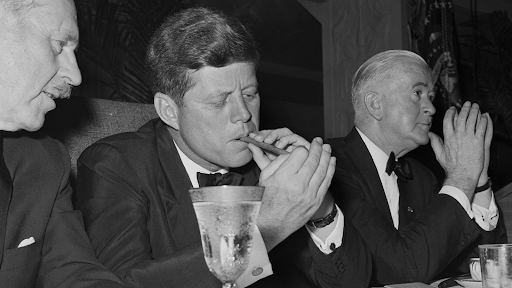
On the morning of February 6, 1962, Pierre Salinger — press secretary to President Kennedy — drove to a Washington tobacconist and purchased eleven hundred Petit Upmanns. He returned to the White House, delivered them to the Oval Office, and Kennedy signed the executive order that banned all Cuban goods from American soil within the hour. The embargo was in place. The cigars were safe.
The story may be apocryphal in its detail but accurate in its character. Kennedy understood what he was about to remove from the market, and he wanted his share before the door closed. What neither he nor anyone around him understood was that in closing that door, he was opening several others — and that what walked through them would, over the following six decades, transform the entire architecture of the premium cigar world.
Before 1962, the conversation was simple. Premium cigar meant Havana. The Vuelta Abajo region in Pinar del Río produced leaf of a quality that the rest of the world acknowledged as the standard, and the rest of the world produced everything else. American consumers bought Cuban. European consumers bought Cuban. The question of where else one might find a serious smoke barely arose, because it barely needed to.
“What the embargo made was not an alternative to Cuban tobacco. It made a world in which Cuban tobacco is one answer among many serious ones.”
The embargo changed the question. Cuban tobacco growers who had survived the Castro nationalisation — many of them the families behind Montecristo, Romeo y Julieta, Partagás — left the island with their knowledge, their seeds, and, in some cases, their rolling techniques, and settled in the nearest hospitable climates. The Dominican Republic received the largest share. Nicaragua followed. Honduras took others. What these countries received was the actual human infrastructure of the Cuban cigar tradition, forced by circumstance to begin again somewhere new.

The results took time to develop — good tobacco always does — but by the 1990s, when Cigar Aficionado launched and the American cigar boom arrived, the Dominican Republic had become the world’s largest producer of premium cigars by volume. Nicaragua had developed its own identity: darker, fuller, more aggressive than the Cuban tradition it descended from, shaped by the volcanic soil of the Esteí valley into something that was no longer an imitation of anything. Honduras contributed its own leaf character. The exiled tradition had not simply survived transplantation. It had speciated.
The irony that serious cigar students live with is this: the embargo, intended as an act of economic punishment against Cuba, produced the most diverse and competitive premium cigar market in history. Cuban cigars retained their mystique — the forbidden fruit dynamic made them more desirable, particularly in Europe and Asia where no restriction applied — but they lost their monopoly on excellence. The smoker of 2025 who has never had a Cuban cigar has access to a range of serious tobacco that would have been unimaginable in 1961. He owes this, obliquely, to a piece of Cold War legislation that was never designed with his palate in mind.
For the man who understands that distinction, this is a considerably more interesting world to smoke in.
For the Man Who Takes
His Cellar Seriously
Cigar notes, blind panel dispatches, and cellar guidance for the serious collector. Inside MGA Premium.
Enter The CellarSources: Cigar Association of America industry reports; Kennedy Library historical records; La Casa del Habano Nyon editorial archive. Images used for editorial commentary purposes. All factual claims verified against primary and peer-reviewed secondary sources.