
Hans Wilsdorf: the Rise of the Rolex Watch
The founding story behind the world's most iconic luxury wristwatch — and why Rolex remains the most recognised luxury watch brand in the world
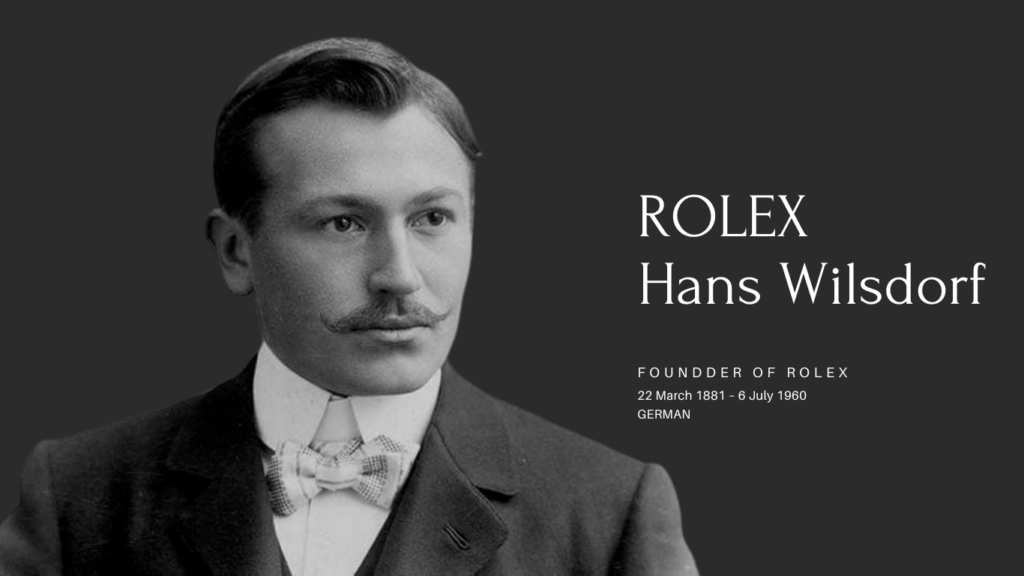
Hans Wilsdorf — Founder of ROLEX
There is a particular kind of man — rare enough to be almost theoretical — who loses everything in childhood and responds not with caution but with a kind of magnificent, unhurried certainty about the future. Hans Wilsdorf was twelve years old when he became an orphan. His mother had gone first. His father followed. His uncles, practical men in the way that only the grief-adjacent can be, liquidated the family iron tools business — a prosperous thing, built across two generations — divided the proceeds, and sent the children to boarding school in Bavaria. Wilsdorf received an excellent education and a very clear message: the ground beneath your feet is temporary. He absorbed the lesson. He just drew the opposite conclusion from it.
Most men, having learned early that inheritance is fragile, build walls. Wilsdorf built a watch company instead. In 1905, at twenty-four years old, he opened the doors of Wilsdorf & Davis at 83 Hatton Garden, London — a firm that specialised in the distribution of timepieces, operated on modest capital, and was held together almost entirely by the founder's unreasonable conviction that the wristwatch had a brilliant future ahead of it. Nobody else thought so. In 1905, wristwatches were considered a joke — a lady's ornament, delicate and impractical, incapable of the precision that a man's world apparently required. Pocket watches were everywhere. The men who wore wristwatches were laughed at. Wilsdorf noted the laughter and kept moving.
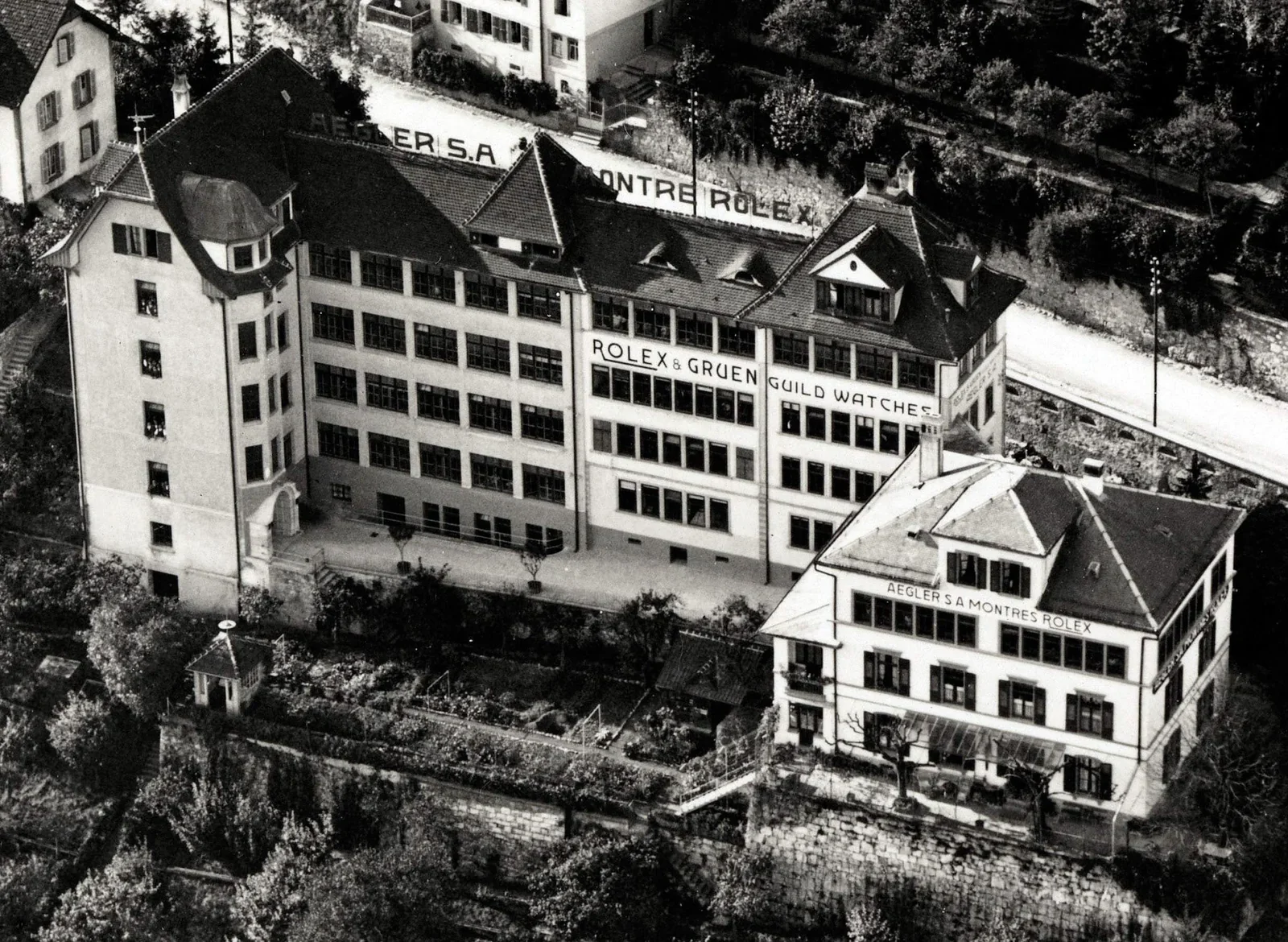
Image Source: Rolex — Geneva, Switzerland, 1919
To understand what Wilsdorf was wagering, you have to appreciate how completely alone he was in his opinion. He wasn't a watchmaker disagreeing with rival watchmakers. He was a young German entrepreneur in London, working with imported Swiss movements from Hermann Aegler of Bienne, placing — in his own words — the largest order for wristwatches ever booked at the time, in a market that had decided the whole category was a novelty. He visited watchmakers. He pressed for smaller, more precise movements. He wrote to suppliers. He put the conviction into letters, into orders, into capital. Years later, he would recall it simply: "I had very early realised the manifold possibilities of the wristlet watch and, feeling sure that they would materialise in time, I resolutely went on my way."
Resolutely went on my way. The most elegant sentence a founder ever wrote about himself.
By 1908, Wilsdorf needed a name. The company needed a brand — something short, pronounceable in any language, elegant enough to fit on the face of a watch. He later described the process of trying every combination of letters in the alphabet, generating hundreds of candidates, finding none of them right. The solution arrived, with appropriate drama, while he sat on the upper deck of a horse-drawn omnibus along Cheapside in the City of London. "A genie whispered 'Rolex' in my ear," he wrote. Whether one takes that literally is a matter of temperament. What matters is that by 1908, the brand was registered. What matters even more is that nobody outside of Wilsdorf's immediate orbit thought it was going to amount to anything.
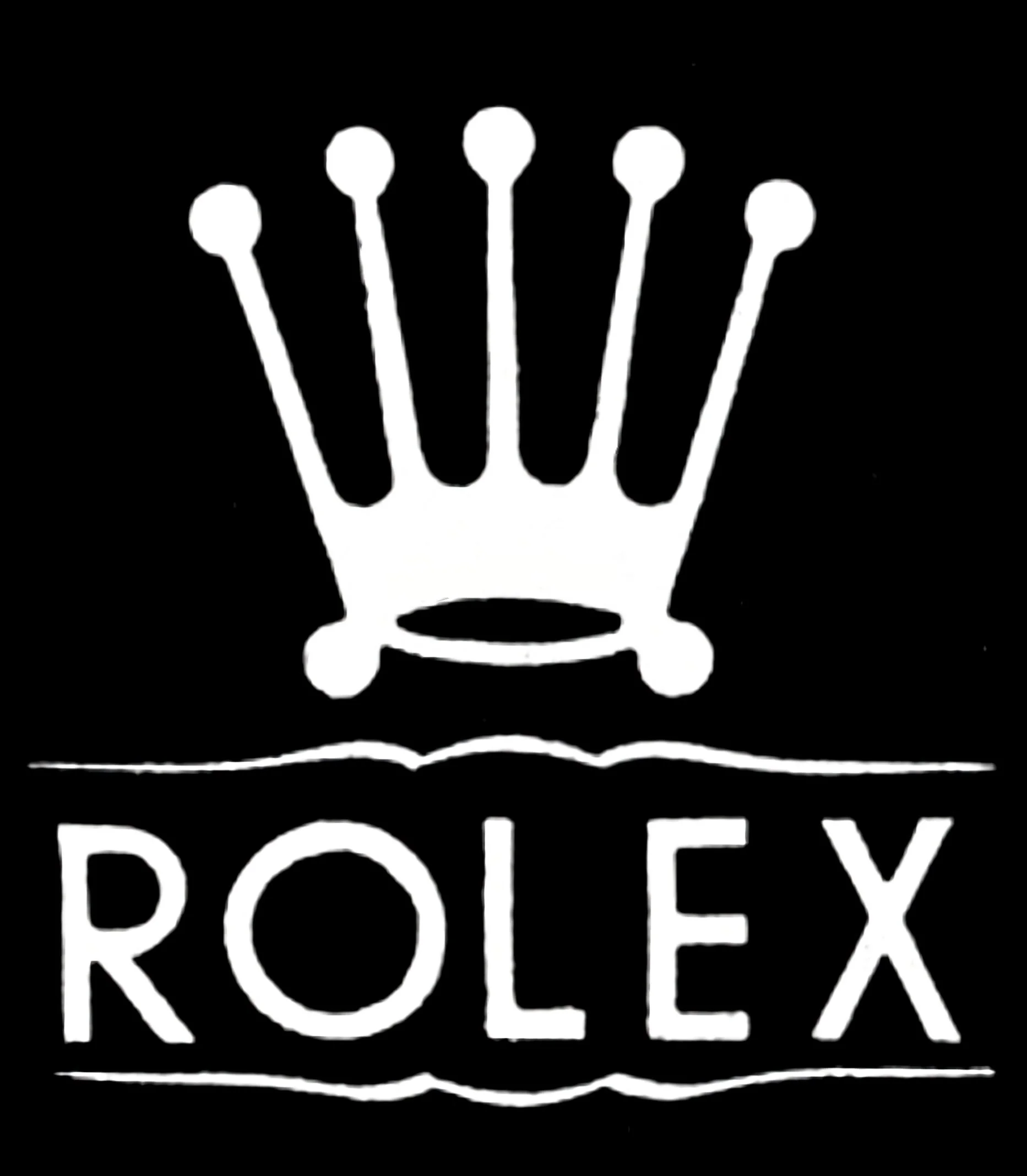
The world politely disagreed. He built the crown anyway.
The 1942 early Rolex Logo — Courtesy of Montres Rolex SA / Rolex SA
In 1914, a decade after opening his office on Hatton Garden, Wilsdorf received his first significant vindication. A Rolex wristwatch became the first in history to receive a Class A certificate from the Kew Observatory — the most rigorous chronometric standard of the era, previously the exclusive domain of precision marine chronometers. The certificate did not simply say the watch was accurate. It said the watch was more accurate than almost anything else on a man's wrist or in his pocket. It said Wilsdorf had been right.
He had been right for years by then, of course. He simply now had the paperwork to prove it.
The story of Hans Wilsdorf is not a story about innovation in the narrow, technical sense. Other men were building movements. Other firms were chasing precision. What Wilsdorf understood — and what distinguishes him from his contemporaries — is that a great watch, in order to become a legendary one, requires a great narrative. He grasped this long before the language of brand storytelling existed. He understood that the wristwatch would not win the argument by being better than the pocket watch. It would win by being seen on the right wrists, in the right moments, doing things that pocket watches could not possibly do.
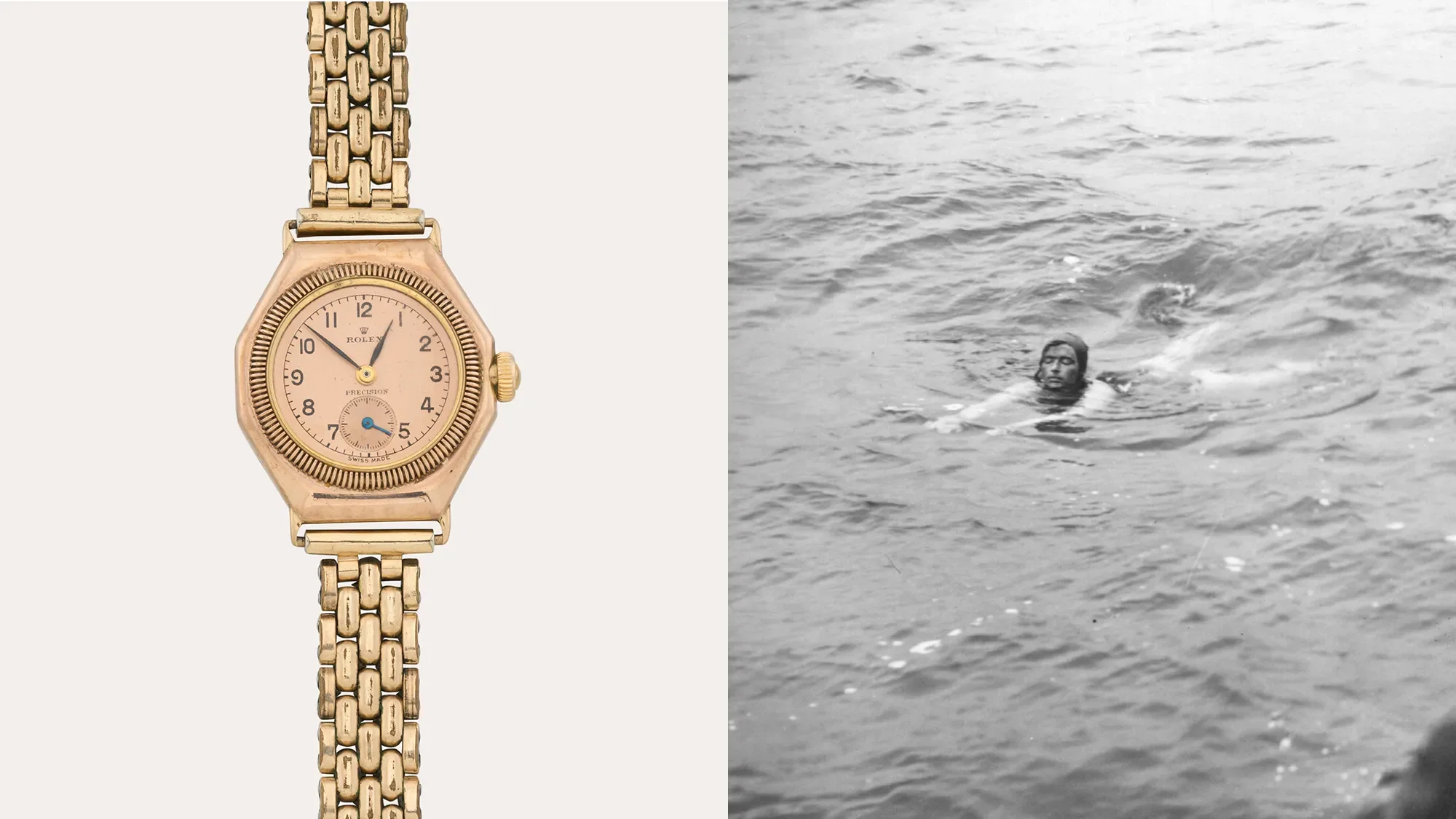
Courtesy of Sotheby’s
In October 1927, a twenty-six-year-old London typist named Mercedes Gleitze became the first British woman to swim the English Channel — twenty-one miles of cold, hostile water, on her eighth attempt. A few days later, another woman claimed to have done it faster. Gleitze agreed to a vindication swim. The conditions were brutal. The water temperature dropped into the low fifties. She lasted over ten hours before being lifted into a rescue boat seven miles short of the finish. Around her neck, on a ribbon, was a small gold Rolex Oyster — the brand's new waterproof wristwatch, launched the previous year. A reporter in the rescue boat noticed it. The watch was still keeping perfect time.
Wilsdorf bought the front page of the London Daily Mail. "The watch that defied the Channel." Gleitze became Rolex's first testimonee — the brand's term, preferred even today, for its curated circle of ambassadors. What Wilsdorf had invented, without calling it anything at the time, was the foundational logic of modern sports sponsorship: let proof speak louder than promotion. The Rolex Oyster had not simply been waterproof in a laboratory. It had survived the English Channel in October, around the neck of a woman swimming through near-freezing water for ten hours, and come up running. That Rolex Oyster — engraved "Miss M. Gleitze, Vindication Channel Swim, October 21 1927" — sold at Sotheby's Geneva in 2025 for well over a million dollars. Proof, it turns out, appreciates beautifully.
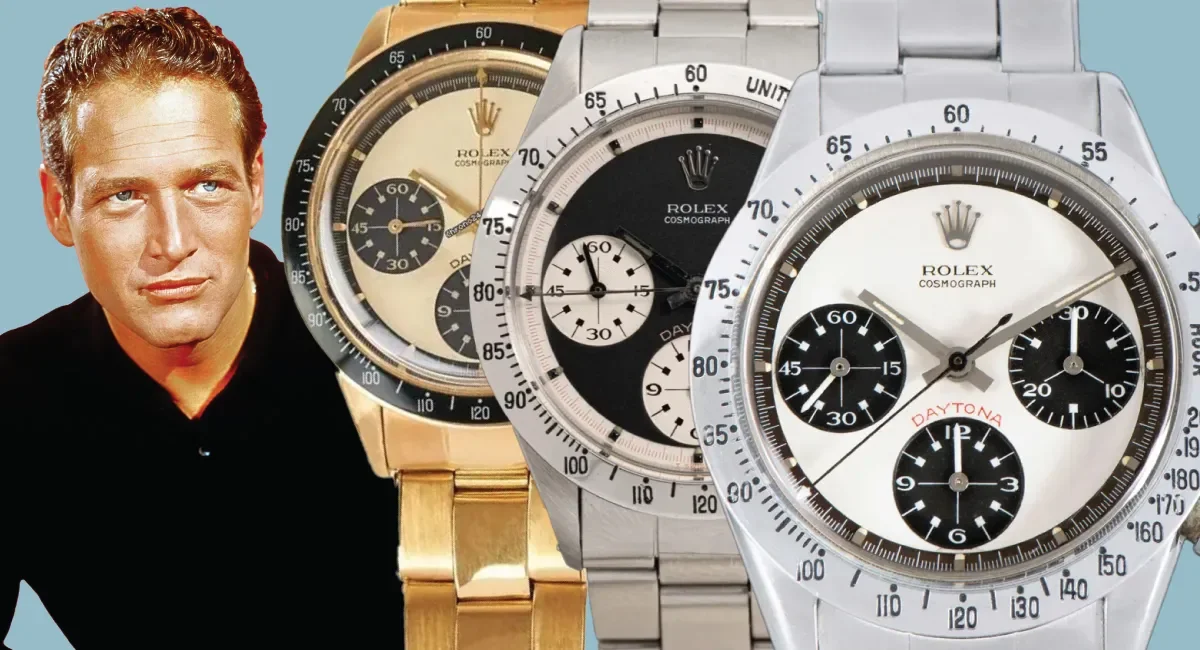
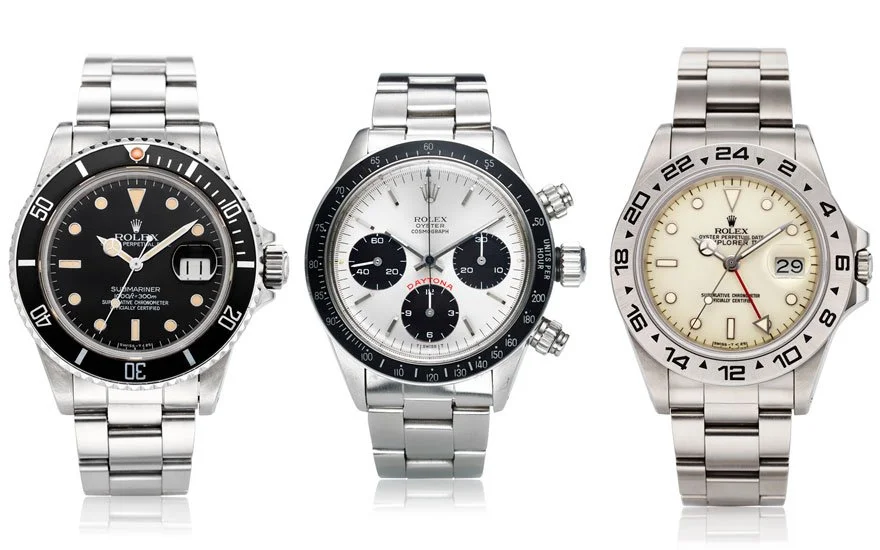
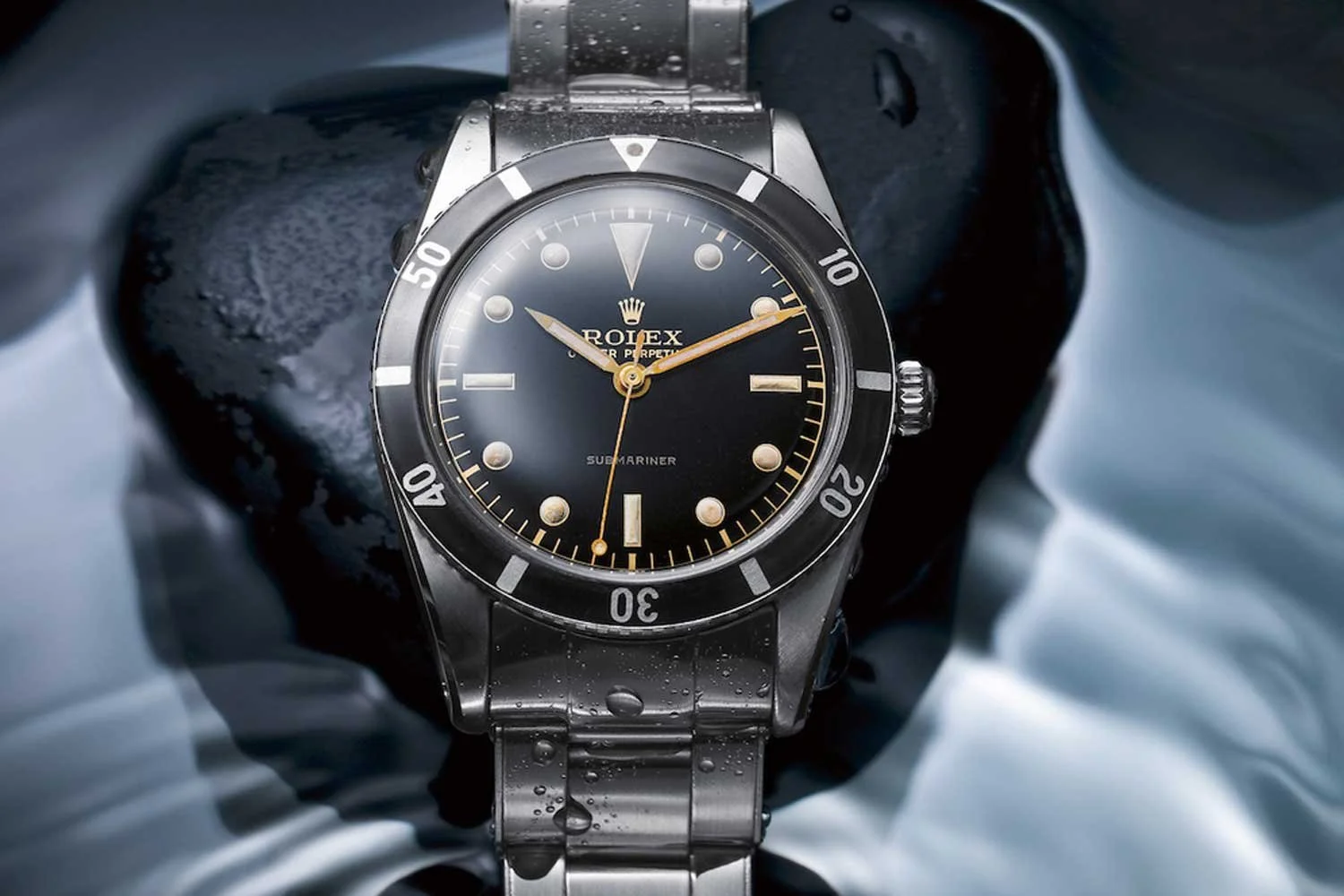
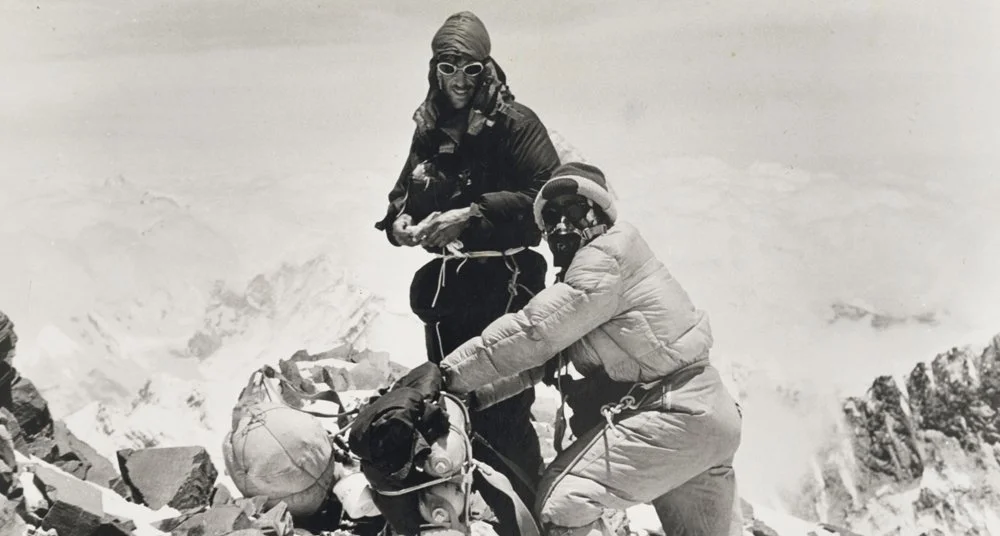
What followed was, in the broad historical summary, a sequence of milestones. The Perpetual rotor in 1931, making the Rolex the first reliably self-winding watch. The move to Geneva. The Tudor brand, created for those who wanted the reliability without the price. The Rolex Submariner in the 1950s — a diver's tool watch that would eventually become the most recognisable luxury wristwatch on earth. The Rolex Explorer, worn on the wrist of a member of Sir Edmund Hillary's expedition to the summit of Everest in 1953. The Rolex Cosmograph Daytona, named for the Florida racetrack, launched in 1963, largely ignored for two decades, then handed to Paul Newman by his wife Joanne Woodward with "DRIVE CAREFULLY ME" engraved on the case back — and eventually sold in 2017 for $17.8 million, making it the most valuable wristwatch ever auctioned at the time.
But milestones are the wrong lens. Milestones describe what happened. They don't explain why a man in London in 1905, with modest capital and no obvious right to certainty, managed to build the thing that all of those milestones hang from.
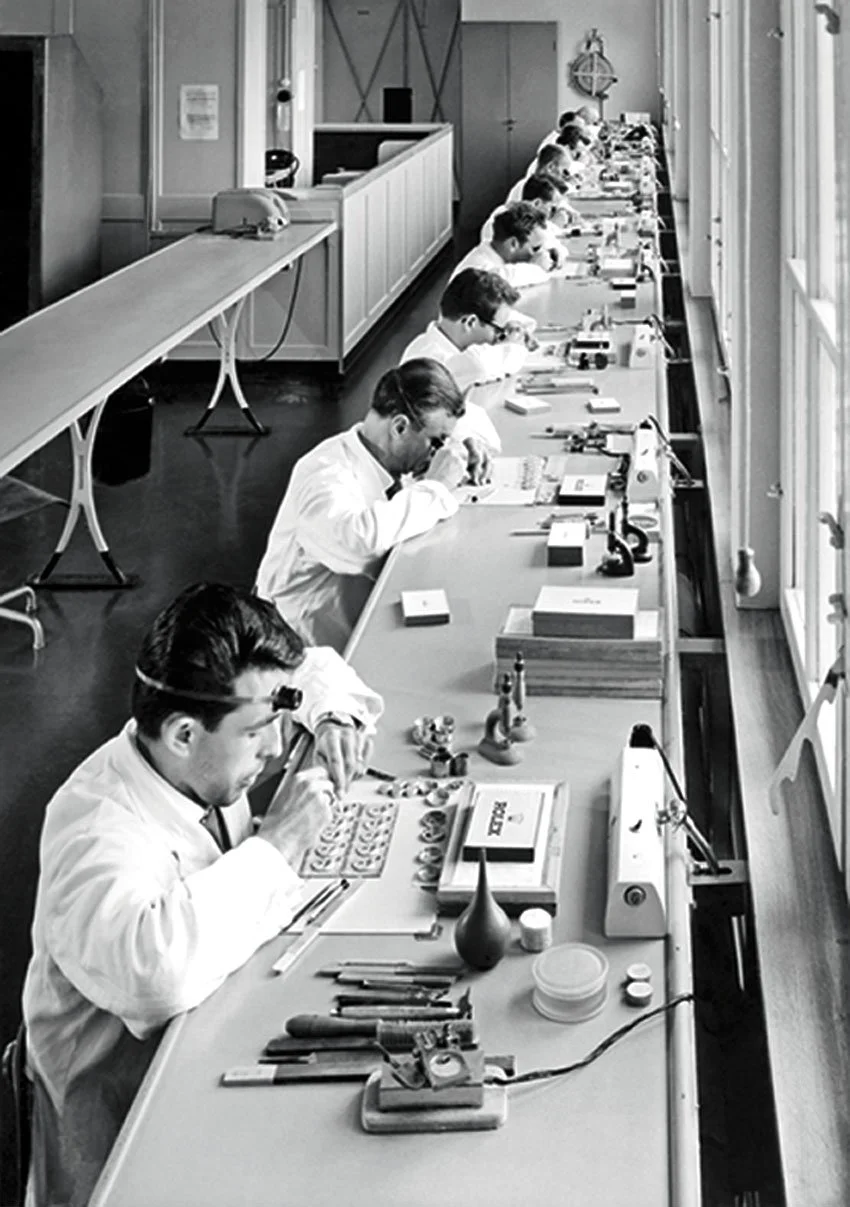
The Aegler/Rolex Bienne Factory 1955
Courtesy of Montres Rolex SA / Rolex SA
The answer, if there is a clean one, lives somewhere in what Wilsdorf lost at twelve. When you have no inheritance to protect, you have no reason to be conservative. When the ground has already shifted once, you know that waiting for stability is a strategy that gets you nowhere. Wilsdorf had the particular freedom of the already-dispossessed: he could not lose what he did not have. So he placed the largest order for wristwatches ever booked. He rode the omnibus and listened for the name. He sent a gold watch around the neck of a woman swimming the English Channel in October, and then bought the front page of the paper when she came out the other side.
There is a reason that the right watch, on the right wrist, still changes the room. It is not about status, not precisely — or at least, not only. It is about the compressed narrative that a great watch carries. A Rolex Submariner speaks quietly of a man who has decided how he wants to move through the world. A Rolex Cosmograph Daytona suggests something about how he values precision, history, and the particular pleasure of a thing that was once overlooked. A Rolex Day-Date — the President, as it became known, worn by heads of state and heads of industry since 1956 — says something different still, something about the weight a man is willing to carry, and how lightly he has learned to carry it.
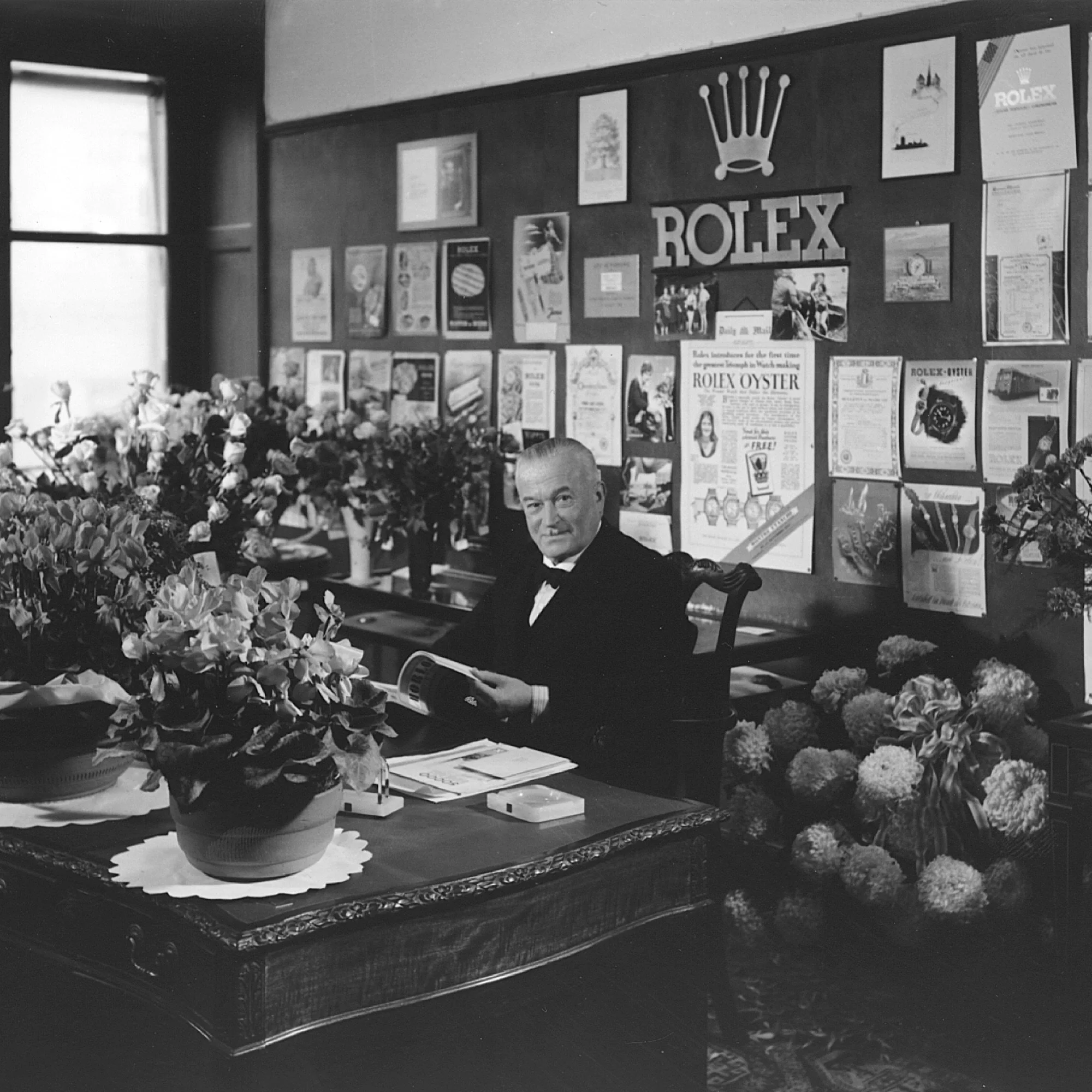
Courtesy of Montres Rolex SA / Rolex SA
None of this would exist without a twelve-year-old orphan in Bavaria who grew up to believe, against all available evidence, that the future belonged to the wristwatch. Hans Wilsdorf died in Geneva in 1960. He had placed the entirety of his Rolex shares into the Hans Wilsdorf Foundation upon the death of his first wife in 1944 — a private trust that has owned and operated Rolex ever since, ensuring that the company he built could never be sold, never be taken public, never be subject to the ordinary pressures that bend ordinary companies. Even at the end, he was thinking in terms of permanence. Even at the end, he was betting on the long game.
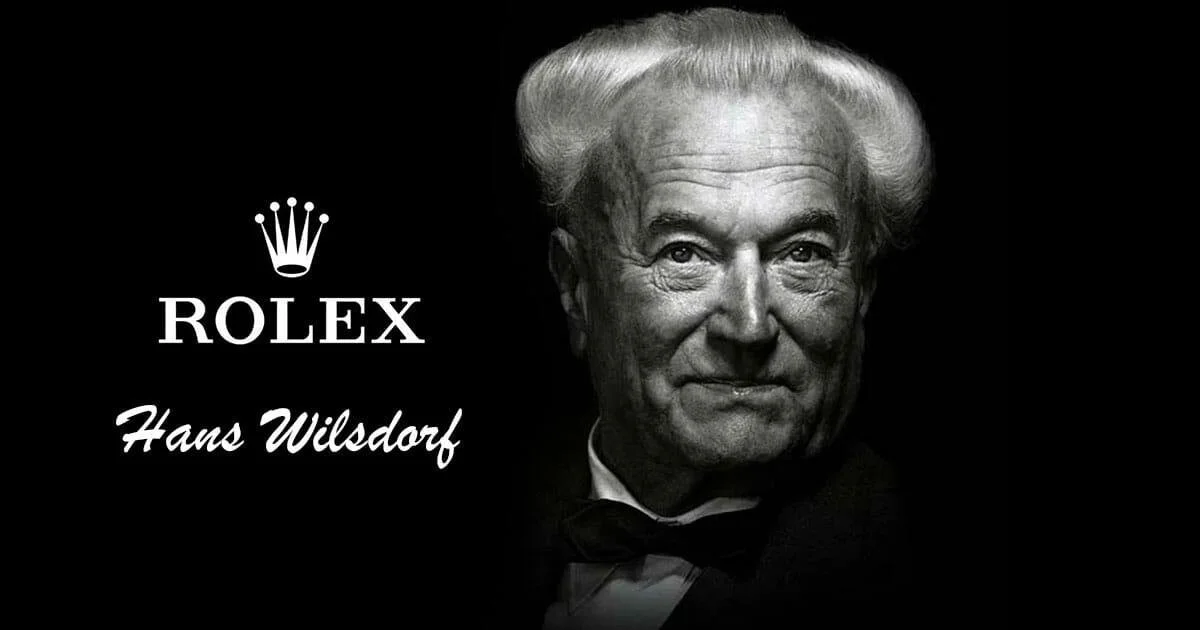
The crown, it turns out, was never meant to be worn. It was meant to be handed down.
Courtesy of Montres Rolex SA / Rolex SA
Modern Gentleman Archive covers the art of living well — cigars, horology, automobiles, tailoring, and refined living. Follow @moderngentlemanarchive for the stories behind the icons.