
The conversation about whether men would return to tailoring has been running for the better part of a decade. It can now be retired. The question being asked in 2026 is not whether men are dressing better — they are — but what kind of better, and why this moment feels different from the last several false dawns.
The shift is visible in the right places. At Pitti Uomo in Florence this season, the two guest labels were Hed Mayner and Soshi Otsuki — both specialists in sharp, modern tailoring built without the rigidity of traditional suiting. At Paris Fashion Week, Haider Ackermann softened tailoring at Tom Ford, Saint Laurent showed tucked-in ties worn with intention rather than obligation, and Celine placed half-popped collars on a runway that sent the industry into genuine conversation. Pharrell Williams, at Louis Vuitton, showed his most refined collection to date — steering the house away from logo-driven streetwear and into what his creative director called more evergreen luxury waters.
What is driving this is worth understanding clearly. Streetwear had a long run. It was genuinely radical when Virgil Abloh brought it to Louis Vuitton and Demna built Balenciaga into a cultural force. Then the pandemic accelerated the casualization of everything, and by the time offices reopened, men who had spent two years in sweatpants found themselves needing a new vocabulary. Quiet luxury was the first answer. Now something more nuanced has followed — a desire to dress with personality and deliberation, without performing wealth through visible logos.

The designer Aaron Levine articulated it cleanly in a recent interview: he makes clothes that feel a little tastier, a little more considered, and allow the personality of the wearer to come through rather than shouting for attention. The man wearing his work has made a choice — not a brand’s choice, his own.
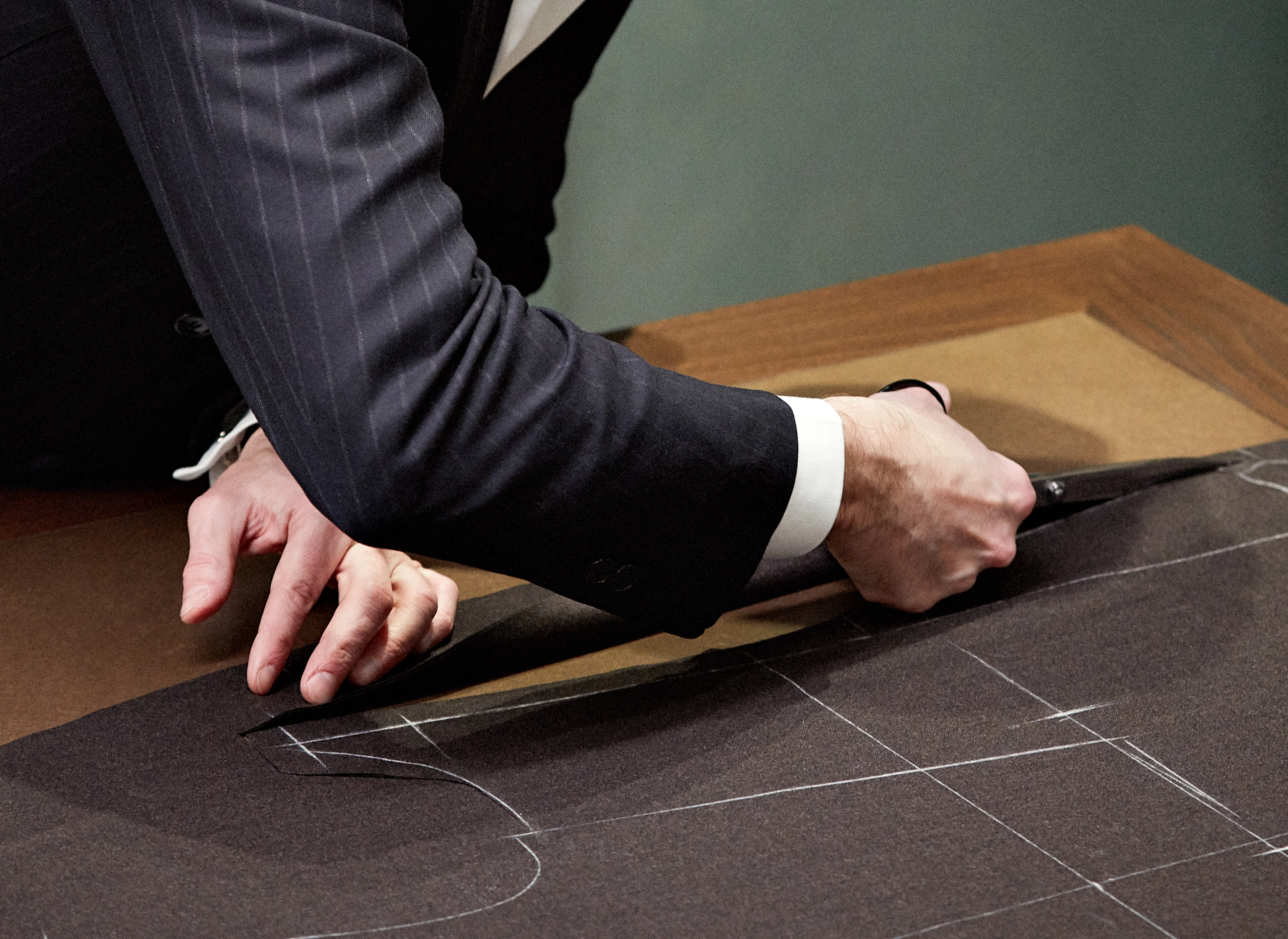
At Savile Row, the response has been characteristically understated and considerably more ambitious than the headlines suggest. Huntsman, established in 1849, has made ready-to-wear a quarter of its business, understanding that a younger client who cannot yet commission bespoke still wants to understand what Savile Row quality feels like before he can afford to fully inhabit it. Henry Poole — the Row’s oldest house, at 220 years — has partnered with Gore-Tex and Canada Goose, not because the tailoring establishment has abandoned its principles, but because historically Savile Row dressed a gentleman’s entire wardrobe, not just his formal hours. Davies & Son became the first Row tailor to show at Pitti Uomo, collaborating with the LVMH Prize-winning designer Satoshi Kuwata on jackets that fold flat like a kimono, applying origami cutting techniques to bespoke patterns with complete structural confidence.

Loafers are the footwear signal of all this. Searches for Saint Laurent’s Le Loafer rose an average of 66% month-on-month through the third quarter of 2025. Ties are returning, worn loosely, layered under knitwear, no longer signalling hierarchy so much as personal intent. These are the details that belong to a man who has made decisions — about what he wears, why he wears it, and what he intends it to say.
The gentleman reading this already understands what the rest of the market is slowly discovering. Tailoring was never about the suit. It was about the decision behind it.