The most affluent travellers of 2026 are no longer signalling status through destination. They are signalling it through disappearance. Privacy has become the defining luxury of the moment — and the industry is reorganising itself accordingly.
Sources: Luxury Travel Advisor, “7 Trends Defining Luxury Travel in 2026,” January 2026 · Elite Traveler, “The Luxury Travel Trends for 2026,” December 2025 · Modern Currency PR, “2026 Luxury Travel & Hospitality Trend Report,” November 2025
There was a period, not very long ago, when luxury travel was performed. The suite at the right address, the table at the right restaurant, the photograph at the right altitude — all of it broadcast to confirm that the traveller had arrived, in both senses. Status was verified through visibility. The more curated the visibility, the more convincing the status.
That logic is running in reverse.
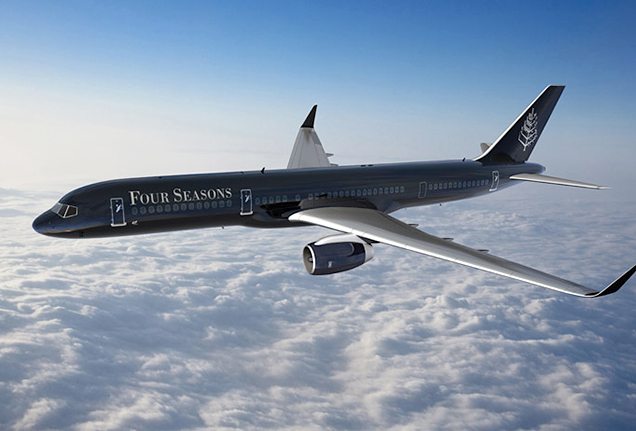
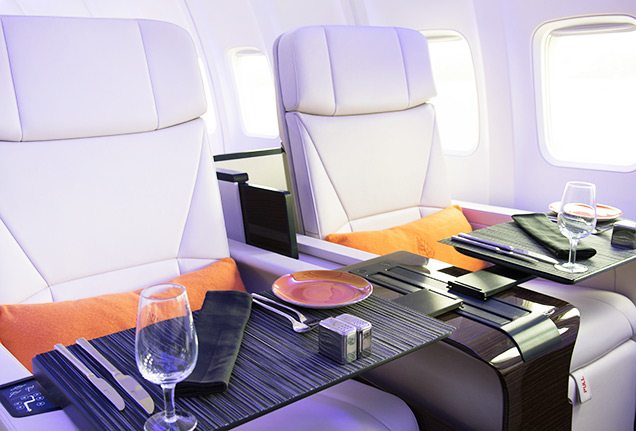
The defining characteristic of how the genuinely affluent travel in 2026 is privacy — the kind that requires planning, access, and considerable resources to achieve, and that leaves almost no public trace. Private air travel and yacht charters have moved from occasional indulgence to standard operating procedure for a growing number of high-net-worth travellers, with the journey itself becoming the experience rather than a logistical inconvenience between destinations.
Courtesy of Four Seasons Hotels and ResortsCourtesy of Four Seasons Hotels and Resorts
The Ritz-Carlton now operates three superyachts. Four Seasons has introduced private branded jets. These are not amenities — they are infrastructure for a new understanding of what a luxury journey means. The shift makes sense when examined from first principles. A man who has achieved genuine success has already verified his status to the people whose opinion he respects. He no longer needs the room in the hotel that signals aspiration to strangers in the lobby. What he requires instead is time, control, and the specific pleasure of being in a place without the architecture of public consumption around it.
Courtesy of The Ritz-Carlton
This has produced a reorganisation of what the hospitality industry offers at the highest level. The trend observers are calling cognitive wellness has emerged as the primary motivator for premium travel planning — not spa treatments as an afterthought, but entire itineraries structured around physical restoration, mental clarity, and what the better retreat operators are describing as longevity programming. Biohacking facilities in the Swiss Alps. Sleep optimisation suites in Scandinavian forest hotels. Private clinical diagnostics delivered alongside the kind of food and wine list that makes the medicine considerably easier to take. The man spending seriously at this level is investing in his own operational capacity, not purchasing a holiday.
Courtesy of The Ritz-Carlton
What this means practically for how the MGA reader approaches travel in 2026 is worth stating directly. The question is not where to go — it is how to go, and what to do when you get there. The destination is almost beside the point. What matters is the degree of control, the quality of the arrangement, and the absence of the kind of noise that the more public forms of luxury travel have become inseparable from.
The gentleman who travels well in 2026 leaves very little evidence that he travelled at all. That is, at this moment, the most convincing possible signal.
Every edition of Modern Gentleman Archive, delivered before the conversation starts.
Editorial commentary reflects the independent analysis of Modern Gentleman Archive. All factual reporting is drawn from cited third-party sources. MGA makes no claim of ownership over source material.